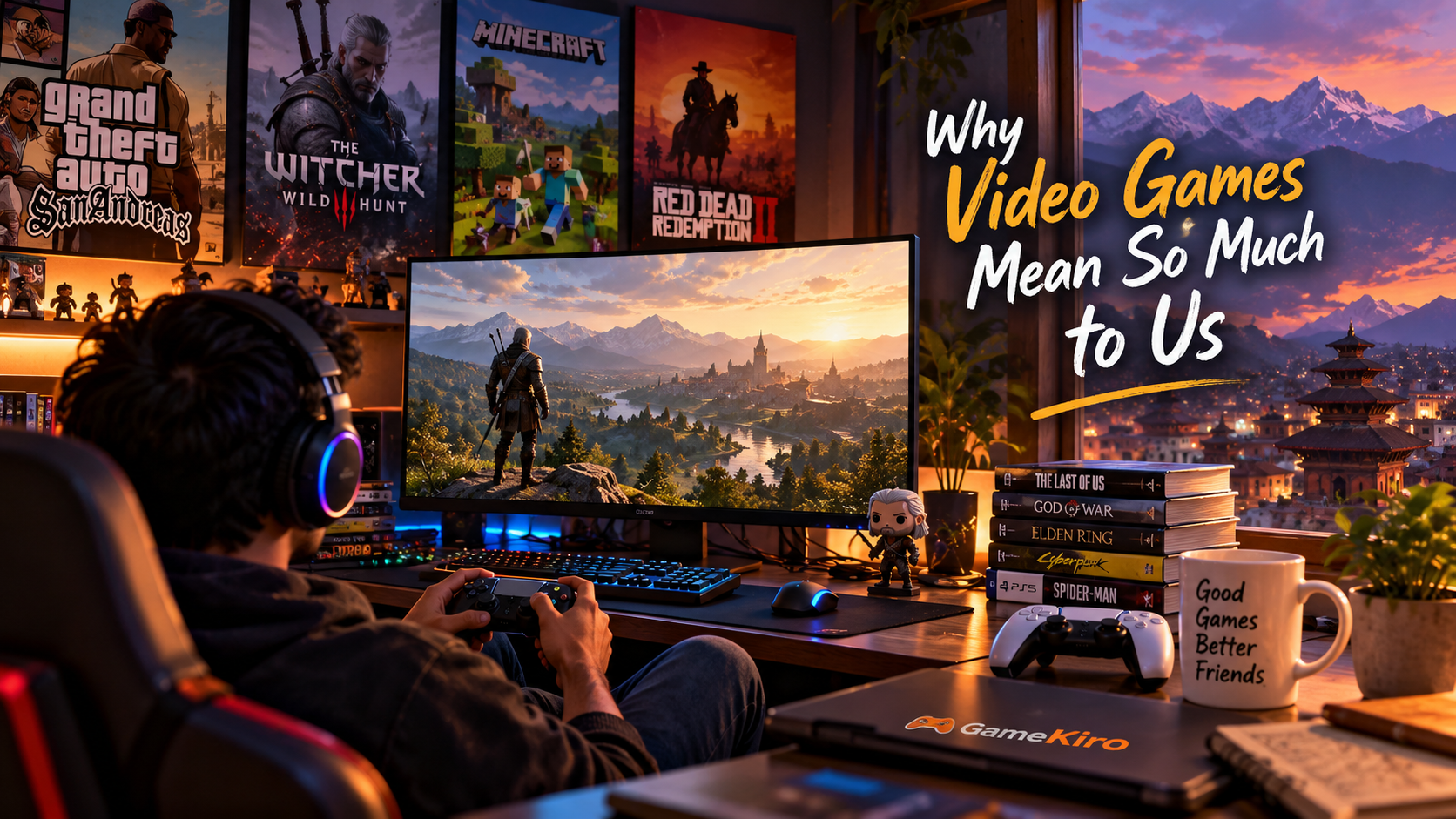
Do you remember the first video game that truly got you hooked?
Maybe it was GTA: San Andreas, when exploring the streets of Los Santos felt like entering another world. Maybe it was Minecraft, where you could build anything you imagined. Or perhaps it was a PlayStation game you played with your friends after school, when the only thing that mattered was winning one more match before going home.
For many of us, gaming has been part of our lives for years. Some people grew up playing games on old computers, while others started with a PlayStation, Xbox, Nintendo, or a simple mobile phone.
But something interesting happens when we look back at those experiences. We don't always remember the graphics, the missions, or even whether we finished the game. Sometimes, we remember who we played with, the excitement of discovering something new, or the feeling of escaping into a different world after a difficult day.
That's why video games can mean so much more than entertainment.
The Games We Grew Up With Never Really Leave Us
There is something special about returning to a game you loved years ago.
You might launch an old game expecting to play for just a few minutes, only to find yourself remembering entire moments from your childhood. A familiar soundtrack, a particular location, or even the opening screen can bring back memories you had almost forgotten.
Games like GTA: San Andreas, Counter-Strike 1.6, Need for Speed: Most Wanted, and early Pokémon titles mean different things to different generations of gamers.
The technology may look dated today, but that doesn't necessarily make the experience less meaningful.
Sometimes, the games we played when we were younger remain our favorites not because they are technically superior, but because of what they represent in our lives.
And honestly, that's difficult for a newer game to replace.
Gaming Has a Way of Bringing People Together
One of the best things about gaming is that it gives people something to share.
Think about the friends who stayed up late playing multiplayer games, the arguments over who was better at FIFA, or the teammates who somehow became friends despite living thousands of miles apart.
Online gaming has made those connections even easier. Players can team up, communicate, compete, and build friendships without ever meeting in person.
Games such as Minecraft, Fortnite, PUBG, Counter-Strike, and many others create opportunities for shared experiences.
Of course, online gaming can also involve toxic behavior, arguments, and unhealthy competition. Not every gaming community is welcoming. But when people treat each other with respect, gaming can be a genuinely social experience.
Sometimes, a game is simply an excuse to spend time with people you enjoy being around.
Why We Get So Attached to Fictional Worlds
Have you ever finished a story-driven game and felt a little empty afterward?
That feeling isn't unusual.
Games such as Red Dead Redemption 2, The Witcher 3: Wild Hunt, and The Last of Us introduce characters, relationships, and difficult decisions that can stay with players long after they stop playing.
Unlike watching a movie, gaming often allows us to participate in the story. We explore the world ourselves, make choices, overcome challenges, and spend hours getting to know the characters.
That interaction can make fictional experiences feel surprisingly personal.
Sometimes, a game makes us think about loyalty, friendship, sacrifice, or the consequences of our decisions. Other times, we simply enjoy being somewhere completely different from our everyday surroundings.
Not every game needs a deep story to be memorable. Some are enjoyable because they are funny, challenging, relaxing, or wonderfully unpredictable.
There is room for all of it.
Gaming Is Not Only About Winning
Modern gaming often places a lot of attention on rankings, competitive performance, achievements, and winning.
Those things can certainly be exciting. Beating a difficult boss after dozens of attempts or finally reaching a competitive rank you've been chasing feels rewarding.
But not every gaming session needs to be a competition.
Some players enjoy exploring beautiful environments. Others prefer building cities, managing farms, solving puzzles, racing cars, or creating entire worlds.
Games can also offer a way to unwind after work or school. A relaxed session of Stardew Valley, Minecraft, or a favorite racing game can be enjoyable without requiring constant competition.
The important thing is finding the kind of experience you enjoy.
Gaming shouldn't always feel like another task on your to-do list.
How Gaming Has Changed Over the Years
Gaming has changed dramatically, even within a single generation.
Older games often relied on simple graphics, limited storage, and straightforward gameplay. Today, many games feature enormous open worlds, realistic environments, complex narratives, and online experiences involving players from around the globe.
Mobile gaming has also made games accessible to people who might never own a gaming PC or console.
Meanwhile, cloud gaming, virtual reality, and advances in artificial intelligence continue to create new possibilities.
However, technological progress doesn't automatically make every new game better than the classics.
A game can have incredible graphics and still feel repetitive. An older game with simpler visuals can remain enjoyable because of its gameplay, atmosphere, or originality.
Perhaps the best thing about gaming today is the variety. There are more ways than ever to play, and there is almost certainly a game suited to your interests and budget.
The Other Side of Gaming: Finding the Right Balance
As much as we love gaming, it is worth being honest about its downsides.
Playing for long periods can interfere with sleep, physical activity, responsibilities, and time with family or friends. Competitive games can sometimes create frustration, while in-game purchases may encourage people to spend more than they intended.
The solution isn't necessarily to stop gaming. It's to make sure gaming fits into a healthy and balanced life.
Take breaks, protect your sleep, set spending limits, and make time for activities away from the screen.
Gaming is at its best when it adds something enjoyable to life rather than becoming something that controls it.
What Makes a Game Truly Great?
Ask ten gamers to name the greatest game ever made, and you'll probably receive ten different answers.
Some will choose a game with an incredible story. Others will choose one with competitive gameplay, endless replayability, a creative world, or unforgettable music.
There may never be a universal answer, and perhaps that's part of what makes gaming interesting.
The best game for you might not be the most expensive release or the most popular title of the year. It might be a small indie game, an old classic, or a mobile game you discovered by accident.
A truly memorable game gives you a reason to return. It makes you curious, challenges you, entertains you, or creates memories you want to revisit.
And sometimes, it simply makes an ordinary day a little better.
Final Thoughts: Every Gamer Has a Story
Gaming has grown from a niche hobby into a major part of global entertainment, but the personal side of gaming remains just as important as ever.
Behind every favorite game is a reason someone remembers it. Maybe it helped them connect with friends, introduced them to an incredible story, or gave them a few hours of enjoyment during a difficult period.
Those experiences are different for everyone, which is exactly why talking about games can be so interesting.
At GameKiro, we believe gaming is about more than graphics, hardware, reviews, or the latest releases. It's also about the experiences we share, the worlds we explore, and the memories we create along the way.
So let's hear from you.
What video game holds a special place in your heart, and why?
Was it a childhood favorite, a game you played with friends, or something you discovered recently? Tell us your story in the comments. You might even introduce another gamer to their next favorite game.
Welcome to GameKiro — where every gamer has a story.
---
Frequently Asked Questions
1. Why do people become emotionally attached to video games?
Players can develop connections through memorable characters, immersive stories, personal achievements, and shared experiences with friends.
2. Can video games help people make friends?
Yes. Multiplayer games and gaming communities can help people connect through teamwork and shared interests, although individual experiences vary.
3. Are older video games still worth playing?
Absolutely. Many older games remain enjoyable because of their gameplay, storytelling, originality, and nostalgic value.
4. Is gaming a good way to relax?
It can be. Enjoyable games may provide entertainment and a break from everyday stress, provided gaming doesn't interfere with sleep, responsibilities, or other important activities.
5. What makes a video game memorable?
Strong gameplay, compelling stories, creative worlds, music, meaningful challenges, and personal experiences can all make a game memorable.