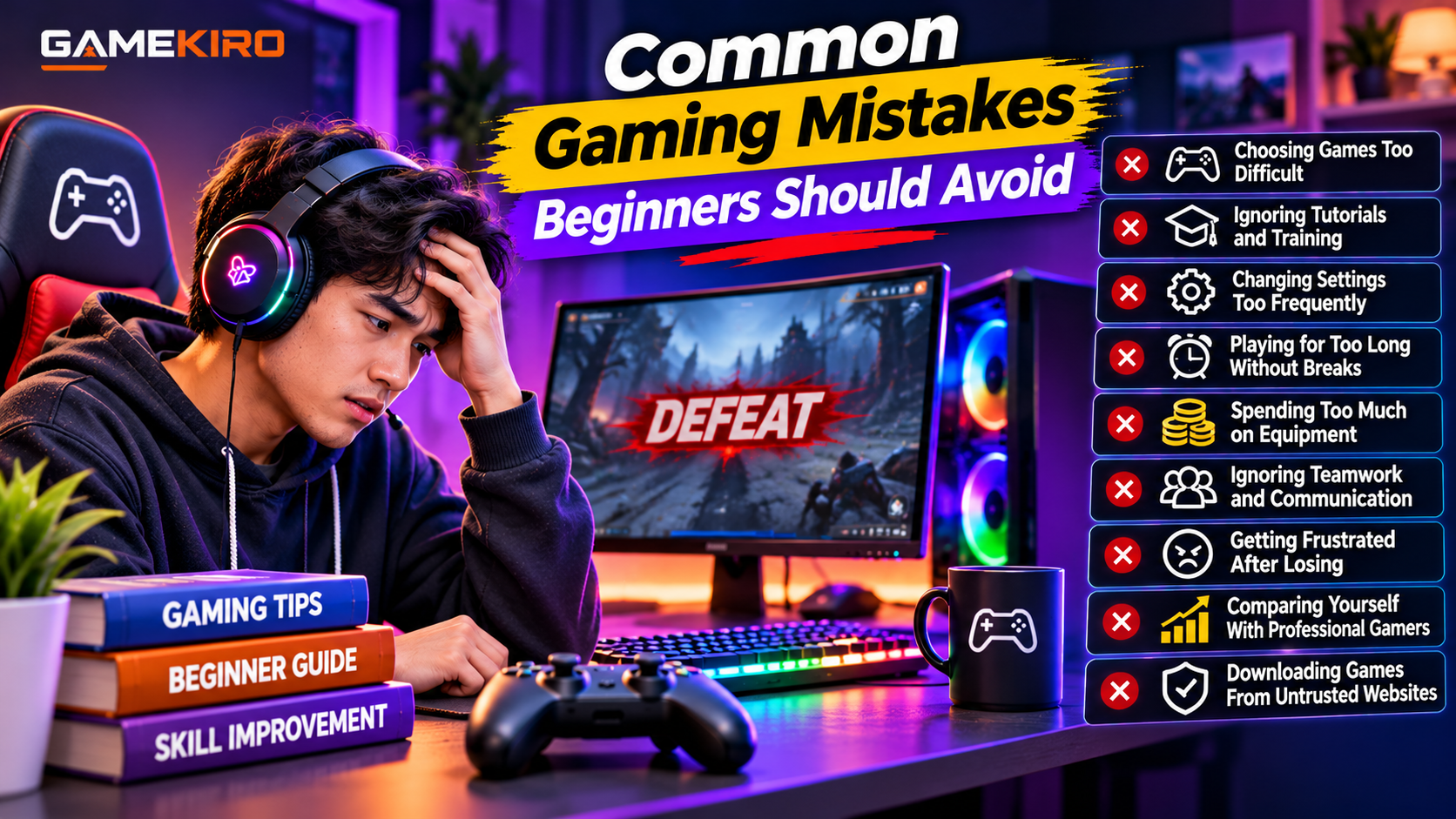
Common Gaming Mistakes Beginners Should Avoid
Starting your gaming journey is exciting, but every beginner makes mistakes along the way. Whether you play on a PC, console, or smartphone, some common habits can slow your progress, affect your performance, and make gaming less enjoyable.
The good news is that most beginner gaming mistakes are easy to fix once you understand them. By learning what to avoid, you can improve your skills, enjoy better gameplay, and become a more confident gamer.
1. Choosing Games That Are Too Difficult
Many beginners immediately jump into competitive or challenging games because they are popular. However, starting with a game that is too difficult can lead to frustration.
Choose games that match your experience level. Learn the basic mechanics first, then gradually move toward more challenging titles.
2. Ignoring Tutorials and Training Modes
Skipping tutorials is another common mistake. Tutorials explain controls, objectives, abilities, and important game mechanics.
Spend a few minutes learning how a game works before jumping into multiplayer matches. Practice modes are also useful for improving aiming, movement, and reaction time.
3. Changing Settings Too Frequently
Experimenting with graphics, mouse sensitivity, controller settings, or mobile controls is useful. However, constantly changing them makes it harder to develop consistent muscle memory.
Find comfortable settings and give yourself enough time to adjust before making further changes.
4. Playing for Too Long Without Breaks
Playing continuously for several hours can cause tiredness, eye strain, and reduced concentration. It may also affect your sleep and daily routine.
Take regular breaks, stretch, drink water, and maintain a healthy gaming schedule. More playing time does not automatically mean faster improvement.
5. Spending Too Much Money on Equipment
Beginners sometimes believe they need an expensive gaming PC, premium headset, or professional keyboard to become better players.
That is not true. Start with reliable equipment that meets your needs. Upgrade only when you understand which improvements would genuinely benefit your gaming experience.
6. Ignoring Teamwork and Communication
In multiplayer games, individual skills are not always enough. Poor communication, ignoring teammates, and playing without a strategy can negatively affect the entire team.
Learn to cooperate, share useful information, and respect other players. Good teamwork can make a significant difference.
7. Getting Frustrated After Losing
Losing matches is part of learning. Beginners often become angry after defeats and blame teammates, equipment, or the game.
Instead, identify what went wrong. Perhaps your positioning was poor, your timing was incorrect, or you misunderstood an objective. Use each loss as an opportunity to improve.
8. Comparing Yourself With Professional Gamers
Professional gamers often have years of experience, advanced equipment, and extensive practice routines. Comparing your beginner performance with theirs can create unrealistic expectations.
Focus on your own progress. Celebrate small improvements and set achievable goals.
9. Downloading Games From Untrusted Websites
Downloading unofficial game files, cheats, or suspicious software can expose your device to malware and account theft.
Use official game stores and trusted websites. Protect your gaming accounts with strong passwords and two-factor authentication where available.
Conclusion
Avoiding common gaming mistakes can make your experience more enjoyable and help you improve faster. Start with suitable games, learn the controls, practice consistently, choose comfortable settings, and maintain a healthy gaming routine.
Remember, becoming a better gamer takes patience. You do not need expensive equipment or professional-level skills to enjoy gaming. Learn from your mistakes, respect other players, and most importantly, have fun.